Featured Image Credit: Rain Drops of Sapphire
Overview of Ehlers-Danlos Syndrome (EDS)
Ehlers-Danlos Syndrome (EDS) is a hereditary disorder of connective tissue which make up our bodies skin, joints, bones, blood vessels and many other organs. It is characterised by hypermobile joints, overly elastic skin tissue and widespread tissue fragility which alters a individual’s strength, elasticity, integrity and healing of tissues.
There are 19 known subtypes of this condition which can affect certain tissues more than others, such as the joints, skin, cardiovascular, neurological and gastrointestinal systems.
The condition has a combined prevalence of 1/5000 individuals worldwide and appears more common in females.
Complications
Chronic pain, fatigue and anxiety are common within this population along with other health complications;
- Joint dislocations/subluxations
- Reflux, abdominal pain
- Gastritis
- Irritable bowel syndrome
- Heart issues
- Jaw dysfunction
- Depression
- Easily bruising and prolonged bleeding times
- Pelvic floor issues.
How do you know if you have EDS?
Consult with your treating doctor who look for certain clinical features and diagnostic tests to help confirm EDS.
- Clinical features: joint hypermobility, recurring joint dislocations, chronic joint or limp pain, soft fragile skin which easily bruises, severe scarring with poor wound healing, poor muscle tone/weakness, delayed onset motor development,
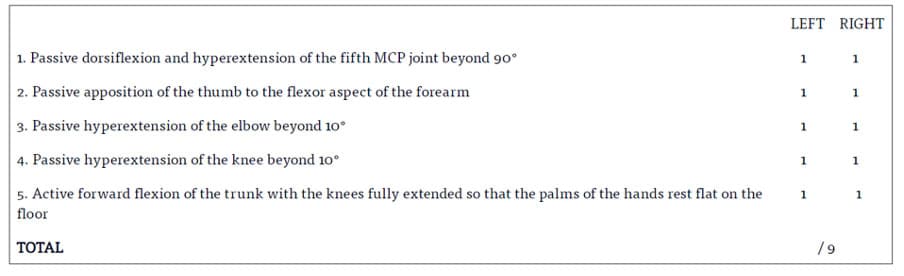
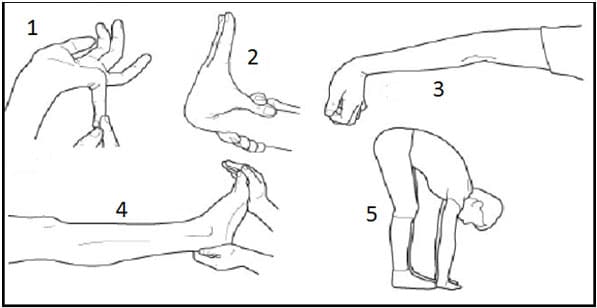
- Beighton score >5/9
- Family history of EDS
Beighton scoring.
Medical Management
Unfortunately, there is no cure for EDS and due to large variability in severity, signs and symptoms is difficult to manage. Consult your treating Doctor for medical management strategies to help control further progression of disease, signs and symptoms and lifestyle adjustments to prevent injury/complications. Individuals with EDS should be managed using a multi-disciplinary team consisting of doctors, orthopaedists, rheumatologists, physiotherapists, occupational therapists, ophthalmologists, and dentists for optimal holistic care.
What can a Physiotherapist do to help?
A Physiotherapist can create management plans to help with pain management using manual techniques, sports/activity participation, improving activities of daily living and quality of life.
Interventions should include:
- Education/advice and reassurance with understanding of condition
- Aerobic, strengthening, core stability and hydrotherapy exercises to improve muscle, joint and bone strength.
- Soft-tissue, manual therapy and taping techniques to help manage pain or disability.
- Other treatments that may be beneficial to manage pain such as, Ultrasound, electrical stimulation and dry needling.